Home care services offer personalized care at home, supporting health and independence by catering to individual needs. This approach fosters autonomy, addresses physical, mental, and emotional health holistically, and allows families to maintain close ties while ensuring optimal care.
What Are Home Care Services?
Scope of Services
Home care delivers health and support in a person’s home, meeting medical, personal, and social needs for independent living. It includes services like medication management, wound care, and meal preparation.
This comprehensive approach adapts to varying levels of need, and its holistic nature is increasingly valued as healthcare evolves.
Types of Home Care Services
Home care services cater to various needs. Medical home health care provides therapy and nursing care. Non-medical care assists with daily activities. Hospice care aids terminally ill patients, and respite care offers temporary caregiver relief. This ensures individuals receive suitable support.
Who Can Benefit from Home Care Services?
Home care helps seniors, chronic illness patients, and those recovering from surgery by providing tailored care in their own environment. It significantly aids in preventing complications during the recovery phase. This personalized care ensures comfort and eases the stress associated with healing.
Why Choose Home Care Over Institutional Care?
Comfort and Familiarity
Home care offers medical and personal care in a familiar environment, promoting mental health by reducing stress and anxiety. Familiarity with surroundings nurtures patients, allowing greater autonomy in their routines, and aids emotional support.
Cost-Effectiveness Compared to Nursing Homes
Home care can be more budget-friendly than nursing homes, providing tailored services to reduce costs. Government and insurance support further enhances affordability, allowing families to manage expenses without quality compromises.
Personalized
Home care provides personalized, one-on-one attention, focusing closely on each patient’s unique needs. Unlike institutional settings, caregivers offer dedicated care and adapt quickly to changes, ensuring dignity and preference.
Promotes Independence
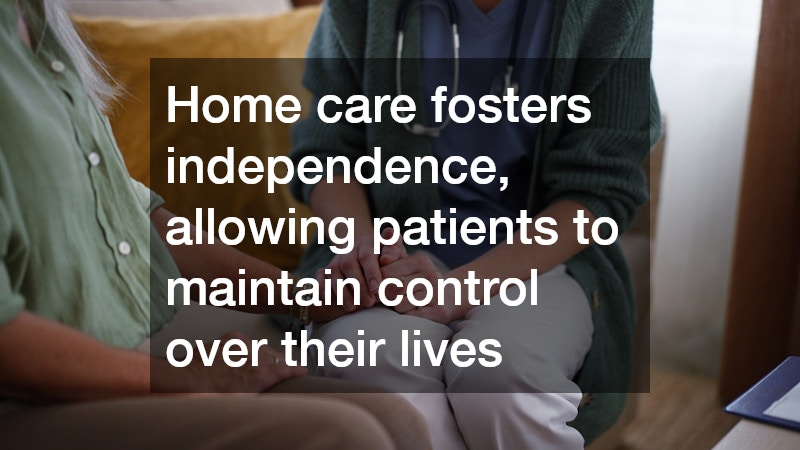
Home care fosters independence, allowing patients to maintain control over their lives. It boosts confidence for self-care activities, supporting mental well-being by minimizing helplessness. Care plans enhance skills and self-sufficiency.
How to Find the Right Home Care Provider?
Assessing Care Needs
Identify your specific care needs by evaluating daily living activities and health requirements. Clearly communicate these needs to potential home care providers to ensure they offer services that meet your expectations and preferences.
Understanding Accreditation and Credentials
Consider a provider’s accreditation and credentials, ensuring compliance with standards and verifying caregiver training and background checks. This validation secures trusted and safe care for patients.
Reviews and Testimonials
Read reviews and testimonials for insights into care quality. Look for consistent positive feedback and competent handling of complaints, reflecting commitment to improvement. These offer personal experiences with the agency.
Contracts and Service Agreements
Contracts outline care scope, responsibilities, and costs. Review these agreements to avoid unexpected fees and responsibilities. Open discussions with providers and legal consultations ensure patient interests are prioritized.
How Home Care Services Benefit Family Caregivers
Reducing Stress for Family Members
Home care reduces stress for family caregivers, who can focus on emotional connections. Professional caregivers manage tasks, easing emotional burdens and fostering a balanced family dynamic.
Professional Support and Supervision
Professional caregivers offer essential support, handling emergencies and routine care safely. This expertise ensures best practices, granting peace of mind and timely intervention for health issues.
Communication and Coordination Between Caregivers
Effective communication and coordination enhance care quality. Regular updates align all parties, with home care providers acting as coordinators in a seamless care network, reducing redundancy and conflicts.
Resources Provided to Family Caregivers
Home care includes family training on patient care aspects like mobility and medication. Educational resources build confidence and competence, supporting stress management and self-care for family caregivers.
What Are the Emotional and Social Benefits of Home Care?
Enhancing Social Interactions with Family and Friends
Home care enhances social interactions, allowing patients to maintain relationships and routines, fostering normalcy and emotional health.
Improving Mental Health Through Familiar Environment
A familiar home environment supports mental health by promoting security and stability. Personal history and routines stimulate positivity and reflectiveness, aiding mental resilience.
Maintaining Daily Routines
Home care respects personal routines and preferences, offering autonomy unlike institutional care. Personalization ensures emotional satisfaction, focusing on holistic well-being.
The Role of Companionship
Companionship from caregivers bolsters emotional health. Strong bonds formed with caregivers combat loneliness and provide comfort and structure, contributing to mental stability.
Home care services provide a dignified life, autonomy, and family peace of mind. Offering personalized attention and both medical and emotional support, they exemplify patient-centered care. Home care enhances physical and social aspects, promoting compassionate and comprehensive care.